
Fontana · San Bernardino County
Garage Conversions in Fontana, San Bernardino County
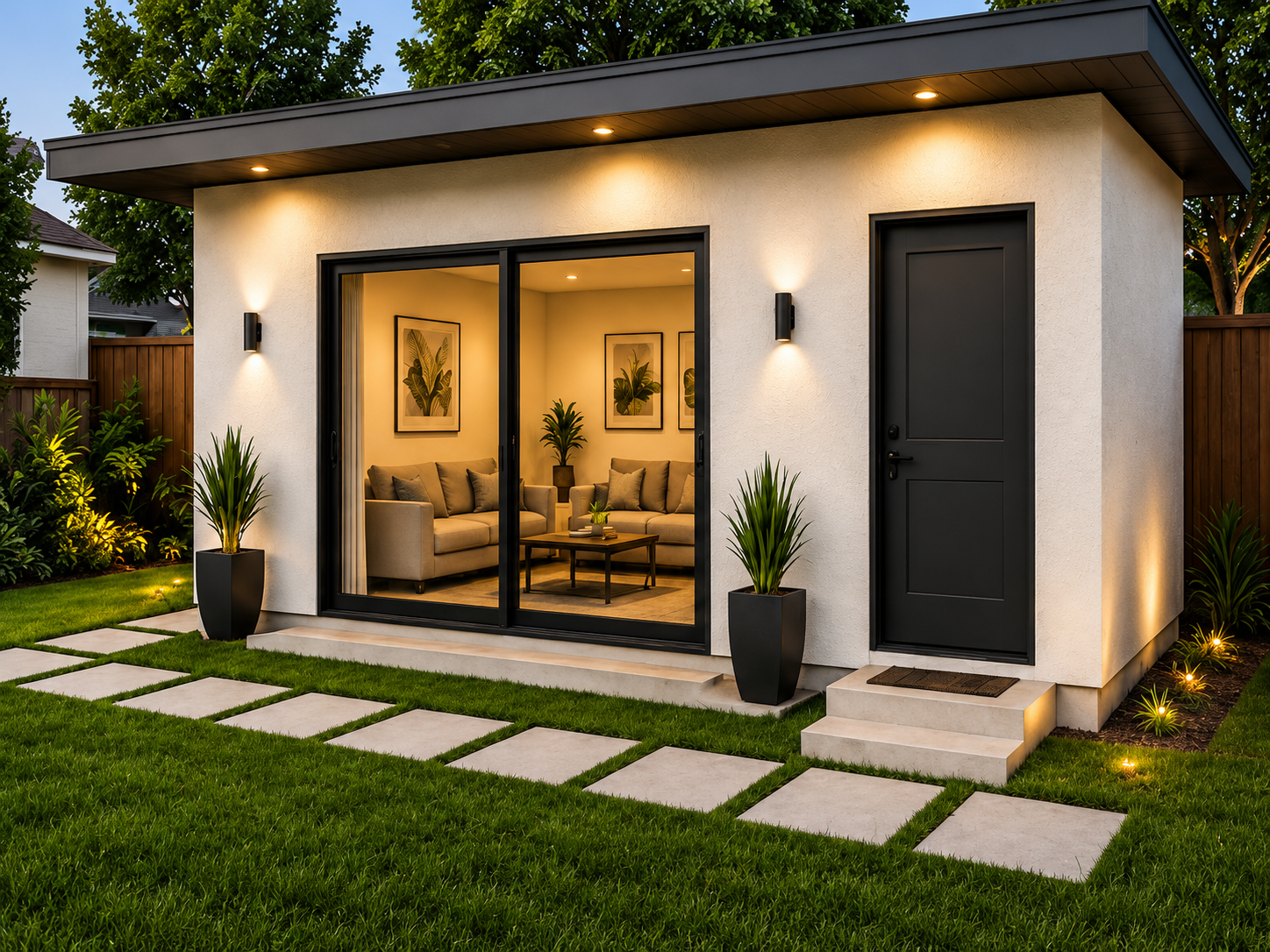
Turning an existing detached or attached garage into a legal, permitted living unit, using the structure and slab you already own. In Fontana that work is reviewed by City of Fontana Building and Safety, with Fontana Fire Protection District involved where access, alarms or suppression apply. Some Fontana addresses are actually unincorporated County. That single fact changes the department, the fees and the timeline.
What garage conversion design and permitting involves in Fontana
Fontana sits in Inland Empire, inside San Bernardino County, and plan review runs through City of Fontana Building and Safety. The housing stock matters here: wide mix of 1950s starter homes and newer master-planned tracts. That existing condition, more than any design preference, sets what is straightforward and what is expensive.
Before we draw anything we run a feasibility review against your specific address. For garage conversion design and permitting that means testing existing structure and slab assessment, conversion design within the existing footprint, structural upgrades, headers and shear where required, and confirming which of the local overlays apply to your parcel. Getting a no in week one costs you a small fee. Getting a no in month five costs you a design.
Once feasibility comes back workable, we produce a permit set that anticipates how this particular department reads the code, submit it, and manage the corrections ourselves. Typical experience in Fontana is roughly 6 to 12 weeks to permit on residential work. On fees, impact fees vary noticeably between the older core and the newer specific plan areas.
What drives the cost of garage conversion design and permitting here
Garage conversions typically run roughly $150 to $275 per square foot, which is why they remain the lowest-cost route to a legal second unit when the existing structure is sound.
Those ranges are honest averages, not quotes. The variables below are the ones that actually move the number on a Fontana project, and they are the first four things we investigate.
Slab condition
An existing slab that is cracked, thin or below grade may need replacement, which erases much of the conversion's cost advantage.
Existing framing
Older garages were built to garage standards. Bringing walls and roof to habitable standards is normal scope, not an exception.
Drainage
Garages often sit low and drain toward the alley. Getting waste line fall to the sewer is sometimes the hardest technical problem on the project.
Fire separation
Attached garages need rated separation from the main house, which affects wall and ceiling assemblies.
Timeline and approvals in Fontana
Permit drawings usually take 4 to 7 weeks, and construction of a straightforward conversion runs 3 to 5 months.
Layered onto that, Fontana review typically takes roughly 6 to 12 weeks to permit on residential work. Where one of the local overlays applies, add its process to the front of the schedule rather than assuming it runs in parallel.
We work across Fontana ZIP codes 92335, 92336 and 92337, and the neighbourhoods most represented in our Fontana work are North Fontana, Sierra Lakes, Southridge, Downtown. Where your parcel sits inside the city changes which overlays and which reviewers you meet.
We give you a written schedule with the approval milestones named, so you can see which dates we control and which belong to an agency. Nobody can compress a hearing calendar. Everybody can submit a complete package the first time, and that is where the recoverable weeks are.
What is included
- Existing structure and slab assessment
- Conversion design within the existing footprint
- Structural upgrades, headers and shear where required
- Title 24 energy compliance for a conditioned space
- Plumbing, electrical and drainage routing
- Permit submittal and inspections
Garage Conversions in Fontana
Send the Fontana address and a sentence about the project. You get a written feasibility answer covering approvals, realistic cost and schedule.
Garage Conversions in Fontana: common questions
Who reviews garage conversion design and permitting in Fontana?
City of Fontana Building and Safety, with Fontana Fire Protection District reviewing access, alarm and suppression scope where it applies. Some Fontana addresses are actually unincorporated County. That single fact changes the department, the fees and the timeline.
How long does garage conversion design and permitting take to permit in Fontana?
Expect roughly 6 to 12 weeks to permit on residential work. Permit drawings usually take 4 to 7 weeks, and construction of a straightforward conversion runs 3 to 5 months. We name the agency-controlled milestones separately in your schedule so you can see what is ours and what is theirs.
What does garage conversion design and permitting cost in Fontana?
Garage conversions typically run roughly $150 to $275 per square foot, which is why they remain the lowest-cost route to a legal second unit when the existing structure is sound. Locally, impact fees vary noticeably between the older core and the newer specific plan areas. We price the three biggest variables at feasibility so the first number you see is close to the last one.
Which local rules commonly affect projects in Fontana?
The ones that come up most are: North Fontana specific plan standards; Industrial and logistics overlays along I-10 and Valley Blvd; Sphere-of-influence parcels reviewed by the County. We confirm which apply to your parcel before design rather than discovering one at plan check.
Which Fontana ZIP codes do you cover?
We take garage conversion design and permitting work across 92335, 92336 and 92337, plus surrounding unincorporated pockets. If your ZIP is not listed, send the address anyway and we will tell you plainly whether we are the right team for it.
Do I have to replace the parking I lose?
In most ADU conversions, no. State law generally prohibits requiring replacement parking when an existing garage is converted to an accessory dwelling unit. Local interpretation still varies, so we verify it against your city before design.
Is a conversion always cheaper than building new?
Usually, but not always. If the slab needs replacement, the framing needs substantial upgrade and the sewer connection needs a pump, the conversion can approach new-build cost with less design freedom. We check those three items first and tell you honestly when new is the better buy.
Can I keep the garage door look?
Yes, and in historic districts it is sometimes required. A fixed door panel or a glazed insert behind a preserved door face keeps the street elevation intact while the interior becomes habitable space.
Other services in Fontana
Garage Conversions in nearby cities
For the full statewide scope of this work, read our garage conversions service page, or see the Fontana service area overview.
Talk to us about a project in Fontana
Send the address, including the ZIP code, and what you want to build. We come back with what the City of Fontana Building and Safety route looks like, a realistic budget range and a schedule.